We work with local government, regional companies, producers, tourism operators, financial institutions, educational institutions, healthcare and welfare providers, and community organizations, building a business model suited to each region.
We do not complete work in a single field alone; we combine multiple business areas to address regional challenges.
01 | Agriculture, Forestry, and Fisheries
Turning primary industries into industries connected to markets: product planning, processed-goods development, branding, exports, and furusato nozei products.
02 | Tourism and Inbound Visitors
Turning a region's places, food, culture, and experiences into tourism products, combined with multilingual support, social media, and reservation systems.
03 | Regional Trading Companies and Nationwide Product Expansion
Connecting regional products to national and overseas markets, from private-brand and OEM development through e-commerce and buyer development.
04 | SME Digital Transformation and AI Management Support
Using AI to support and automate everyday operations such as sales, quotes, customer management, and business analysis.
05 | Sales and Channel Development for Regional Businesses
Identifying prospective buyers and consolidating proposals, sales materials, and negotiation records.
06 | Shopping District and City-Center Revitalization
Digitalizing an entire shopping district as one commercial zone by integrating stores, events, tourism, and e-commerce.
07 | Vacant Houses, Idle Real Estate, and Regional Asset Use
Analyzing potential uses for vacant houses, closed schools, and idle facilities, and recruiting operators or new residents.
08 | Relocation, Settlement, and Related Population
Supporting matching that integrates work, housing, childcare, and community for people considering relocation.
09 | Labor Shortages, Recruitment, and Regional Employment
Supporting job postings, candidate matching, recruitment communications, and training with AI.
10 | Business Succession and Regional Business Revitalization
Organizing business assets and supporting matching with successor candidates and investors.
11 | Startups and New Business Creation
Supporting market research, business planning, revenue models, and pilot testing.
12 | Regional Finance, Investment, and Fundraising
Organizing business plans and financial information, and preparing materials for financial institutions and investors.
13 | Government Digital Transformation and Regional Data Use
Supporting document search, inquiry handling, and regional data analysis to make administrative work more efficient.
14 | Disaster Prevention and Regional Safety
Supporting systems that deliver necessary information quickly during disasters and emergencies.
15 | Healthcare, Long-Term Care, and Welfare
Supporting operations such as reservations, inquiries, and information sharing (not medical judgment or diagnosis).
16 | Education, Childcare, and Community Learning
Combining local educational resources with AI to build learning and workforce development environments.
17 | Culture, Tradition, and Regional Content
Turning traditional crafts, festivals, and food culture into digital assets and products.
18 | Sports and Events
Connecting sports teams, tournaments, and regional events with the local economy.
19 | Environment, Energy, and GX
Using environmental, energy, and waste data to create new regional businesses.
20 | Regional Transportation and Logistics
Supporting more efficient movement, delivery, and demand forecasting.
21 | Regional Media and Communications
Continuously turning regional information into articles, social media, video, and multilingual content.
22 | Overseas Expansion and Globalization of Regional Industry
Connecting regional products, technology, and tourism resources to overseas markets through research and sales support.
For regional revitalization to be more than a one-time effort, it needs a structure that can continue as a business. APC aims to create ongoing economic activity within a region by combining multiple business models, including projects with government, joint projects with regional companies, regional trading company operations, AI and DX projects, product development and sales, e-commerce and platform operations, sales channel development, and overseas expansion.
A Business Production Example
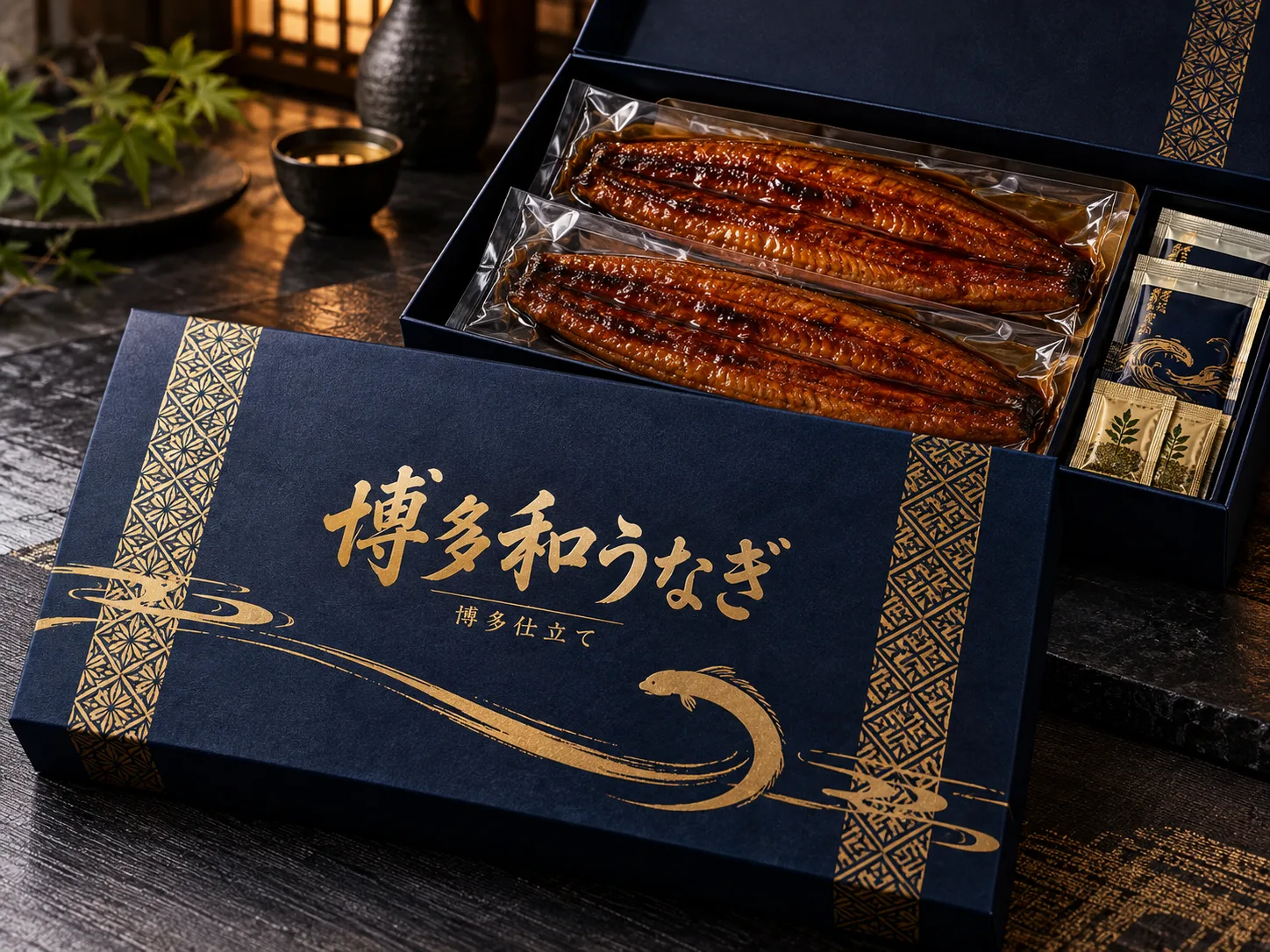
FEATURED PROJECT | SEAFOOD × REGIONAL REVITALIZATION
Authentic flavor,
to the world.
Hakata Wa Unagi: a halal and aquaculture DX project
Photos are for illustration.
Bringing seafood resources up to global quality.
From designing halal-compliant management on the seafood site, to developing a dedicated app that guarantees on-site traceability, to designing an alcohol-free sauce that recreates traditional flavor. This is the story of an end-to-end structure, set in motion by the project team, that extends the potential of seafood resources to the world.

Halal certified
Certified for both product and facility
BrandHakata Wa Unagi
BaseFrom Fukuoka Hakata to the world
HalalProduct and facility certified
The team's roleFrom concept to structure
Read the project storyClose
The Challenge
Why was authentic halal eel so hard to achieve?
Grilled eel, kabayaki, is a traditional Japanese dish. Making it truly global and halal meant clearing extremely high hurdles.
Beyond the sake and mirin (alcohol) in the traditional sauce, the entire seafood supply chain, from farming through processing and shipping, needed a structure that maintains and records strict process control and traceability.
Authentic traditional flavor, strict halal standards, and real-world seafood operations. To overcome these intertwined challenges, a project team was formed, bringing together producers, culinary craftspeople, system engineers, and specialists.
The Approach
Building one consistent halal structure, from site to system.
What the project team took on went beyond product development: designing an end-to-end structure that fuses site operations with technology.
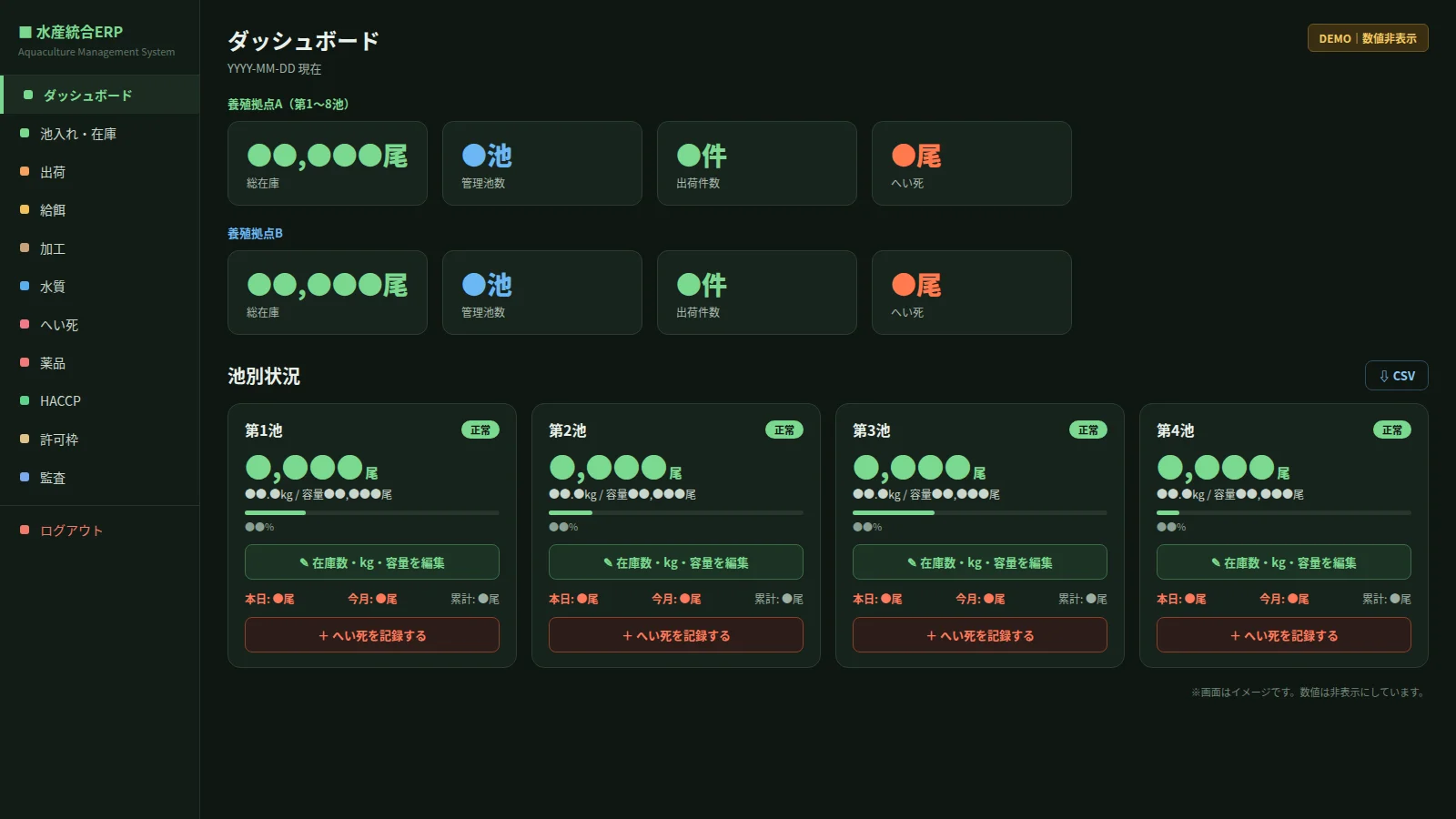
1Site management and a dedicated app to support it
A management structure compliant with halal standards and HACCP was designed from farming through processing and shipping. A dedicated management system and app were also developed and introduced to record water quality, feeding, and process data accurately and smoothly on site, ensuring strict traceability.
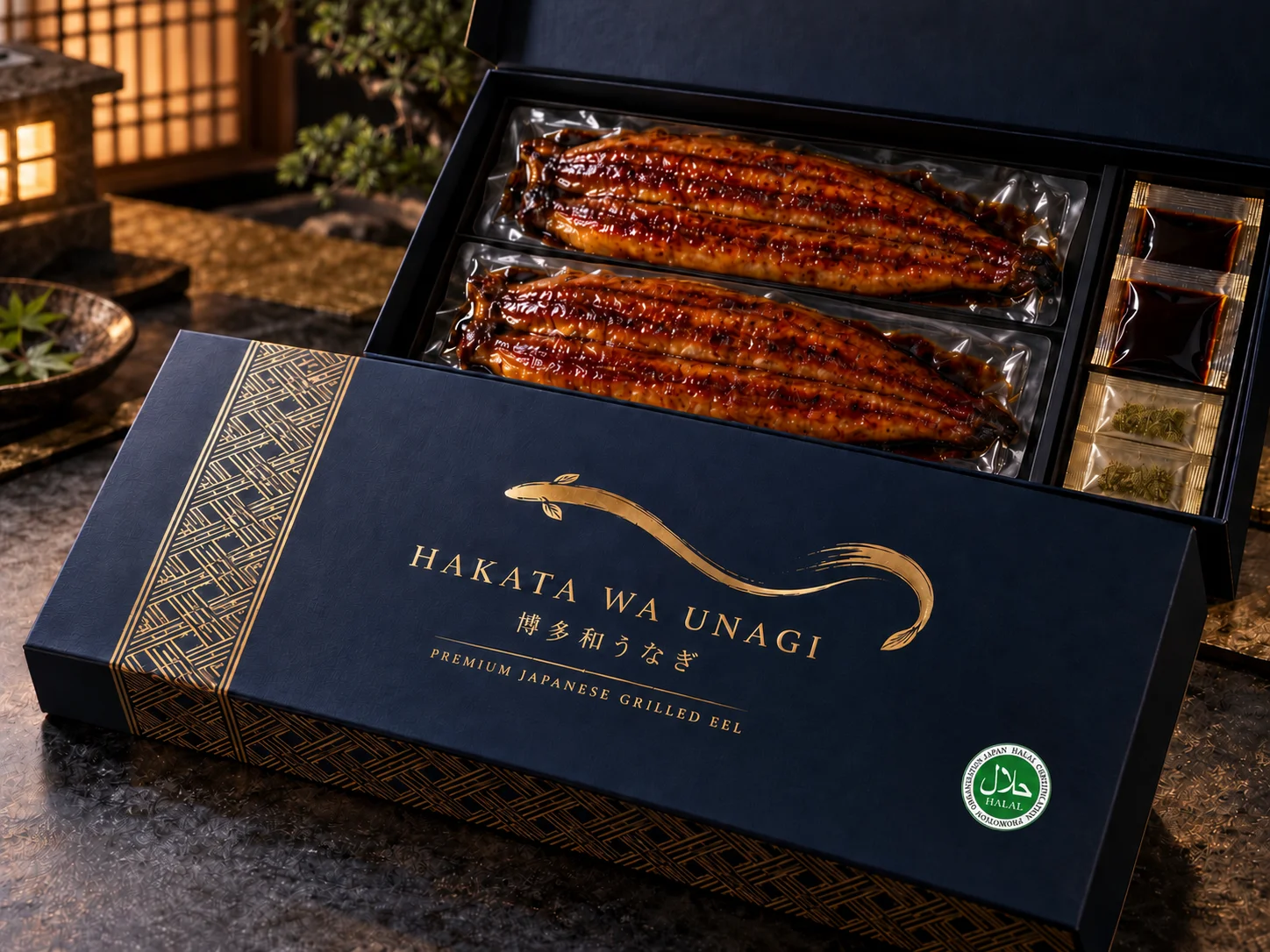
2Recreating traditional flavor without alcohol
The team pursued the logic of a dedicated sauce that draws out the depth, richness, and umami unique to Japanese cuisine without sake or mirin. By combining craftsmanship with a chemical approach, it succeeded in recreating authentic kabayaki flavor while remaining halal.
3Establishing brand value for global markets
Building on the reach of Fukuoka Hakata as a food hub, the brand was designed as Hakata Wa Unagi for premium overseas markets and inbound demand.
Results
What the project achieved
- Halal certification for product and facility
- Water, feeding, and process records managed in one system
- The Hakata Wa Unagi brand launched for the world
The Vision
Giving regional seafood resources a structure that connects to the world.
Japan's regions and seafood sites still hold rich resources and skills that can compete globally. Combining them with the right planning, strict management, and technology (DX) opens new global markets that were previously out of reach.
The project team will continue to stand alongside regional and seafood sites, supporting their value from behind the scenes and building structures that carry it to global markets.
Carrying on-site insight into the next seafood business
When starting a new eel farming or seafood processing business, connecting management, records, sales channels, and branding from the outset, not only facilities and volume, often decides whether the business can last.
Drawing on this on-site experience, the project team works with companies and regions entering seafood businesses, shaping the business together from the concept stage.
Last updated: 2026-10-02 | Responsible party: Asia Produce Company Co., Ltd.
 Asia Produce Company Co., Ltd.